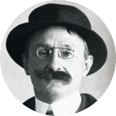
Albert Marquet Art Prints
Albert Marquet, a major French painter of the twentieth century, marked the history of art with his unique vision and bold approach to colour. A friend of Henri Matisse, he explored Fauvism before developing his own style, characterised by vibrant brushstrokes and subtle light. From the quays of the Seine to Algiers, via the port of Honfleur and Notre-Dame de Paris, his paintings capture the atmosphere of places with a rare sensitivity.
Discover the works of Albert Marquet, with iconic canvases by the artist, such as his oil on canvas Le Quai de Paris à Rouen (1912, Musée national d'Art moderne, Paris), a painting from his many trips to Normandy, Pont Saint-Michel (Private Collection), one of his many canvases depicting the bridges of Paris and the Seine, or his watercolour and pencil on paper painting Les Sables d'Olonne (1918, Private Collection), painted during his holidays by the Atlantic Ocean. Treat yourself to a reproduction available in the catalogue of a painting by one of the greatest painters of water and light of the 20th century, and discover the life of Albert Marquet by browsing his biography
Biography of Albert Marquet
Albert Marquet : The early years
Albert Marquet was born in Bordeaux in 1875. From an early age, the young boy was characterised by shyness and short-sightedness, which made him seem different to the other children. He took refuge in drawing, a field in which he showed a predisposition from an early age. His mother, noticing his budding talent, encouraged him to pursue this path.
Thus making his first contact with art, Albert Marquet discovered painting and pictures, particularly oil on canvas, and developed a passion for this world. Bordeaux, his home town, and the area around the Bassin d'Arcachon where he spent most of his family holidays, provided him with his first field of artistic exploration. He spent his youth there observing and reproducing the urban and harbour landscapes that surrounded him, laying the foundations for his future life as an artist.
Albert Marquet in Paris
The young man with a passion for art arrived in Paris from Bordeaux in 1890. He entered the École des Arts Décoratifs, where he had a decisive encounter with Henri Matisse, who took him under his wing. Together, they entered the École des Beaux-Arts in Paris in 1892, in the studio of the painter Gustave Moreau, and then the Camillo private academy.
The young Matisse's passion for art led him to study at the École des Beaux-Arts in Paris.
This prestigious and stimulating setting enabled Marquet to perfect his technique and develop his own style. He made friends with other young artists, such as Charles Camoin, and immersed himself in the bustling artistic life of the capital. Paris, with its banks of the Seine, its iconic monuments such as Notre-Dame, and its unique atmosphere, became an inexhaustible source of inspiration for the young painter.
Marquet enjoyed depicting the city and its inhabitants, capturing the essence of Parisian life in his paintings. Water, omnipresent in his work, reflected the light and brought the urban landscapes to life. In particular, he painted views of the Quai Saint-Michel, where he would later set up his studio.
From 1901, Marquet exhibited his paintings at the Salon des Indépendants, an event that brought together avant-garde artists and promoted free and innovative art. He also took part in group exhibitions with his friends Matisse and Camoin, notably in Berthe Weill's gallery, which recognised the talent of those who would later be called the Fauves.
His early years in Paris were also punctuated by trips to France, notably to Honfleur in Normandy, where he became friends with Raoul Dufy. These visits enabled him to enrich his palette and experiment with new techniques. Marquet was then in the midst of developing his style, oscillating between a certain classicism inherited from his artistic upbringing and a more modern touch that grew stronger with each passing year.
While Marquet's Fauvist period truly began at the start of the 20th century, his early years in Paris were marked by a more traditional approach to painting, in which the rigour of the drawing and the accuracy of the tones took precedence. It would be some time before his style broke free of convention and his palette exploded in vibrant colour.
Albert Marquet and the Fauves
The year 1905 marked a turning point in modern art and in the life of Albert Marquet. In Paris, it was the year that Fauvism broke out, a revolutionary pictorial movement that was to overturn the codes of painting. Marquet, alongside Henri Matisse, André Derain, Maurice de Vlaminck and Kees van Dongen, became one of the major players in this adventure.
The 1905 Salon d'Automne marked the emergence of Fauvism. The young artist's paintings, exhibited among those of his friends, stood out for their vivid, pure colours, applied in flat tints and with no concern for realism. His landscapes, particularly those depicting the Saint-Michel district or the banks of the Seine, show a simplification of form and a bold use of colour. Water, an omnipresent element in his work, becomes a pretext for the play of light and reflections.
Marquet and Matisse, with whom he had already formed a deep friendship for several years, painted together, influencing each other and exploring the possibilities offered by this new pictorial language. Other artists, such as Camoin and Jean Puy, gravitated around them and participated in the effervescence of the Fauve movement.
While Marquet shared with the other Fauves a taste for expressive colour, he was distinguished by a certain restraint. His palette was less violent, his compositions more structured. He attached great importance to the frame and the construction of space. His more measured style sometimes earned him the reputation of being a "moderate Fauve".
Although after this period of intense experimentation, Marquet continued his career by exploring other avenues, he would nevertheless remain marked by the Fauvist experience, which liberated his palette and enabled him to develop a personal and recognisable style. More accustomed to painting Parisian landscapes than depictions of nude women, as many of the Fauvist painters were, and despite his evolution, Marquet will remain associated with Fauvism, a movement that left its mark on the history of art and paved the way for modernism.
The early travels of Albert Marquet
Already considered to be a first-rate painter by 1907, Albert Marquet nourished his life with incessant travel. With Camoin, his friend and artistic accomplice, he discovered London, with the Thames quayside or Blackfriars Bridge as a backdrop. But the young artist soon had to return home when his mother died, so he stayed in the south of France in Ciboure and Saint-Jean-de-Luz. The following year, Italy called, where he visited museums and art galleries, from Rome to Naples, via Fiesole. On his return to France, he settled in Poissy, charmed by the port and the guinguettes.
The year 1909 was marked by a trip to Germany, where he visited the Berlin Museum, the Dresden Museum and the Munich Museum, before flying to Naples and Sicily. Tangiers and Seville followed, where he immersed himself in new light and exotic landscapes. In 1910, he explored Bavaria and Austria with Matisse, his lifelong friend. Despite his fragile health, Marquet continued his travels. In 1911, he criss-crossed Normandy, painting Honfleur and Rouen under changing skies. Morocco again attracted him, a country whose arts he would discover, confirming to him that he would not be an Orientalist, followed by Marseille and Toulon, where he captured the vibrant atmosphere of the ports.
Recognition for Albert Marquet
From the early 1900s, recognition of Albert Marquet's talent grew steadily from exhibition to exhibition alongside his friends, as collectors' interest grew. From his early years in Paris, he took an active part in the Salon d'Automne, exhibiting his works alongside other innovative painters. His paintings, often in oil on canvas, depicting the banks of the Seine, with the Quai Saint-Michel or the Quai des Augustins, the water, and the bridges of the capital, such as the Pont Saint-Michel and the Pont Neuf, are characterised by a unique approach to colour and light. Marquet, although linked to Fauvism, developed a personal style, more measured in its use of bright colours.
His views of Paris, particularly of the Quai Saint-Michel, bear witness to the young painter's attachment to the capital and its urban landscapes. In addition to the Salons, Marquet exhibited in Parisian galleries, such as the Galerie de la rue Royale, but also abroad, from 1907 onwards, from Liège to Moscow, via Vienna, Prague, Saint Petersburg, London and even Riga, attracting the attention of art critics and enthusiasts. His work, far from being limited to Parisian scenes, was enriched by his many travels, enabling him to paint other subjects, other lights, thus helping to establish his reputation in France and abroad.
Albert Marquet, the travelling painter
Albert Marquet, a tireless painter and traveller, found Algiers a refuge and an inexhaustible source of inspiration between 1921 and 1947. It was here that he met Marcelle Martinet, his future wife, who would share his life and his travels. Fascinated by the light and landscapes of Algeria, he painted numerous canvases depicting the port, the quayside and the Kasbah of Algiers. His painting Vue de la Casbah (1920, oil on canvas) is a perfect illustration of this period.
The couple, married in 1923, continued their explorations of the Mediterranean, in the company of other artists and art lovers such as Louvre curator Jean Guiffrey and Georges Duthuit, Matisse's son-in-law, with Italy, Spain and stopovers in Cadiz and Algeciras, and Morocco where they stayed in Marrakech and Rabat. Marquet, always in search of new settings, immortalised these journeys in his paintings, capturing the essence of Mediterranean ports and towns.
On his return to France, he returned to his studio in La Frette-sur-Seine, where he devoted himself to painting the Seine and its bridges, and made frequent trips to Sables-d'Olonne and Le Havre. Marcelle, who became an invaluable collaborator, managed his career and organised exhibitions of her husband's work, thus contributing to the artist's recognition. Their complicity and shared passion for travel had a profound effect on Albert Marquet's life and work.
Marcelle and her husband, Albert Marquet, had a close relationship.
Albert Marquet and the war
Albert Marquet's life was turned upside down by the Second World War. In 1940, the painter left La Frette-sur-Seine and his house near Paris, to move to Algiers with his wife Marcelle. This hasty departure was motivated in particular by the fear of reprisals following his signature of a petition against Nazism. He then entrusted his paintings to friends, including Desnoyer and Vlaminck, to keep them safe.
In Algiers, Marquet continued to paint, notably views of the port and surrounding landscapes. There he met other artists and maintained a correspondence with his friend Henri Matisse, sharing his concerns and news. Despite the distance and the difficulties, Marquet remained committed, refusing to exhibit in Paris during the Occupation and indirectly supporting the Resistance by selling his works for its benefit. After the war, he returned to France and Paris, marked by these years of forced exile.
The last years of Albert Marquet
After his return from Algeria in 1945, Albert Marquet was thrilled to return to his Parisian flat and the view of the Pont-Neuf that he loved so much. Despite the joy of returning to Paris with his wife Marcelle, the painter was marked by the tense post-war political climate. He nevertheless resumed his life as an artist, exhibiting his works at the Salon de la Marine and the Salon d'Automne, among others, and devoting himself to painting and lithography.
Marquet divided his time between Paris and his house in La Frette-sur-Seine, where he met up with friends including Matisse. Unfortunately, the end of Albert Marquet's life was overshadowed by illness. Operated on in January 1947, he was diagnosed with cancer. Weakened, he continued to paint, however, producing several paintings of the Pont-Neuf and the banks of the Seine from his window. Albert Marquet died on 14 June 1947 at La Frette-sur-Seine, leaving behind a considerable body of work that bears witness to his unique talent.
The Albert Marquet style, a timeless artist
Albert Marquet, a timeless artist, captured the essence of modern life with a unique pictorial style. The gallery of paintings produced by the artist, often oils on canvas, is characterised by a bold use of colour and simplification of form, heralding modern art. A keen observer of nature and architecture, he excelled at depicting urban landscapes, especially views of bridges, as seen in his work Le Pont Neuf la Nuit. Marquet was particularly fond of port scenes, brilliantly painting the quays of Rouen and Les Sables-d'Olonne. His works are now exhibited in a number of prestigious museums, including the Musée d'Art Moderne in Paris and the Musée des Beaux-Arts in Bordeaux. Among his masterpieces, including his painting Vue de Notre-Dame sous la neige and Le Port de La Rochelle, the apparent simplicity of its setting and composition conceals a profound artistic sensibility that transcends the ages.
The legacy of Albert Marquet
Albert Marquet, a major figure in Fauvism, left a considerable artistic legacy. His influence on the painters of his generation, particularly Matisse with whom he worked throughout his life, is undeniable. His works, characterised by a simplification of form and a bold use of colour, paved the way for modern art.
While recognition of his talent was immediate, with exhibitions in renowned galleries from the beginning of the 20th century, such as the Berthe Weill Gallery and the Rue Royale Gallery, interest in his work intensified after his death. Major retrospective exhibitions have celebrated his work, ensuring his place in art history. In particular, the Musée d'Art Moderne de la Ville de Paris holds several of the artist's paintings, such as his painting The Port of Naples, an oil on canvas vibrant with light.
Marcelle, his wife, has also played a crucial role in the preservation and dissemination of his work. Thanks to her efforts, many of his works are now exhibited in museums around the world, and private collectors are snapping up his canvases. His painting, La Seine à Paris (oil on canvas in the Musée d'Art National d'Art Moderne in Paris), demonstrates his mastery of light and composition. Marquet thus continues to inspire generations of artists, confirming the timeless modernity of his work.
Learn more about the life and the works of Albert Marquet.